Redefining Car Culture: Understanding Gen-Z's Unique Relationship with Cars

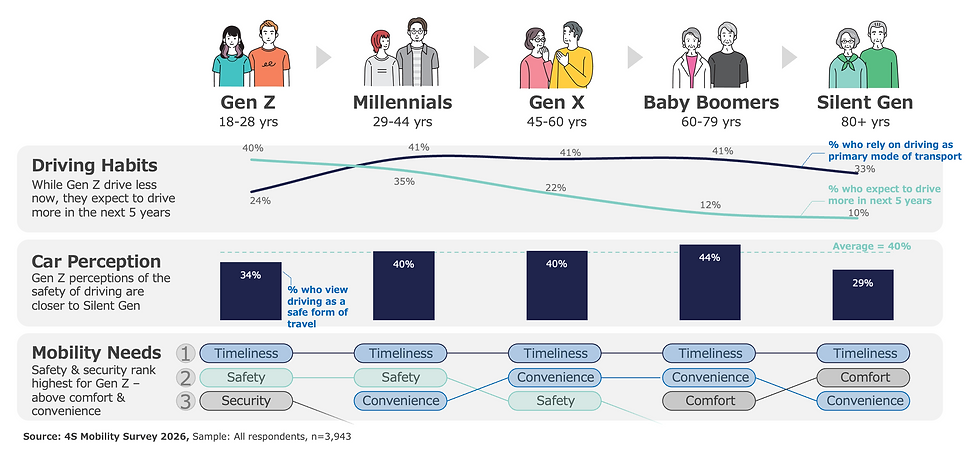
The narrative that younger generations, especially Gen-Z, are simply anti-car is widespread. Yet, the latest 4S Mobility Survey challenges this assumption. Gen-Z shows a surprising trend: they expect to drive more in the coming years and rely less on public transport compared to some older groups. This shift signals a complex relationship with cars and mobility that goes beyond traditional views. For mobility industry professionals, understanding these nuances is essential to meet evolving customer needs and design products that resonate across generations.
Gen-Z mapping their own journey
Gen-Z’s approach to cars is not about status or freedom in the classic sense. Unlike previous generations who often saw cars as symbols of independence or social standing, Gen-Z prioritizes safety, security, and stress reduction in their mobility choices. This shift reflects broader societal concerns, including urban congestion, environmental awareness, and mental well-being.
Key points about Gen-Z’s mobility expectations:
They want vehicles that offer advanced safety features such as collision avoidance and driver assistance.
Comfort and convenience rank high, with interest in technologies that reduce driving stress.
Connectivity and integration with digital lifestyles matter, including seamless smartphone interfaces and real-time traffic updates.
Environmental impact influences decisions, but it does not always translate into rejecting cars outright.
This means automotive companies must rethink how they design and market vehicles to younger buyers. The focus should move from traditional appeals to freedom and status toward delivering practical, secure, and user-friendly mobility solutions.


Comments